
Essential Ingredients Every Home Kitchen Needs for French Cooking
Let’s cut through the fancy talk. French food at its best isn’t about truffles and caviar. It’s about turning a handful of humble, excellent ingredients into something you actually want to eat. The magic isn’t in rarity; it’s in knowing what to stock so you can make real food without a pilgrimage to a specialty shop. This is your no-nonsense list.
The Foundation: Fats & Oils
This is where the flavor starts. French cooking is built on fat, and using the right one changes everything.
Butter, and lots of it. Unsalted is your command centre. It’s for sautéing, finishing sauces, and making pastries. Why it matters: That distinct, rich, nutty flavour in a seared steak or a silky sauce? That’s butter.
Tip: Keep a wrapped block in the freezer for baking. For high-heat cooking, clarify it or mix it with a little oil to stop it from burning.
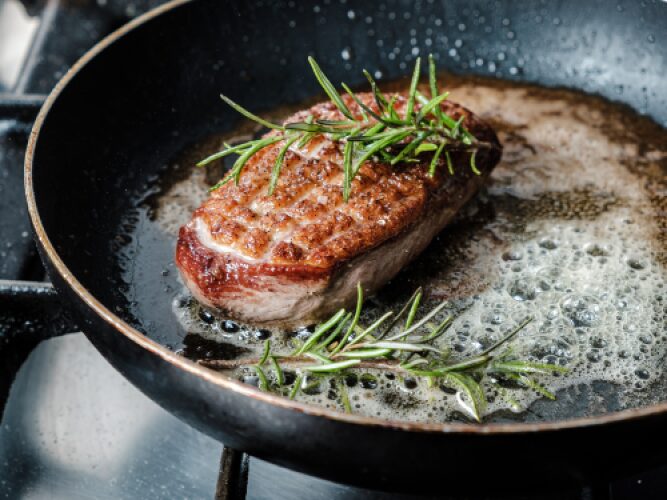
A neutral oil. Like grapeseed or sunflower. Use it for higher-heat searing, vinaigrettes, and when you don’t want the flavour of olive oil.
Tip: Don’t waste expensive olive oil for searing your diced beef. Use neutral oil, then finish with butter for flavour.
Extra-virgin olive oil. Less ubiquitous than in Mediterranean cooking, but essential for salad dressings and drizzling in the South of France.
Tip: Buy a small, dark bottle. Keep it sealed and away from light. It’s a finishing oil, not a cooking workhorse.
The Aromatics: Flavor Builders
These are your first ingredients in the pan. They build the base layer of almost every savory dish.
Shallots. The quiet superstar. They’re sweeter, gentler, and more refined than onions. You’ll mince them for vinaigrettes, sauces (eg. Beurre Blanc), and pan deglazing.
Tip: Choose firm, heavy shallots with no green sprouts. No shallots? A mix of finely minced onion and a pinch of garlic is a decent stand-in.
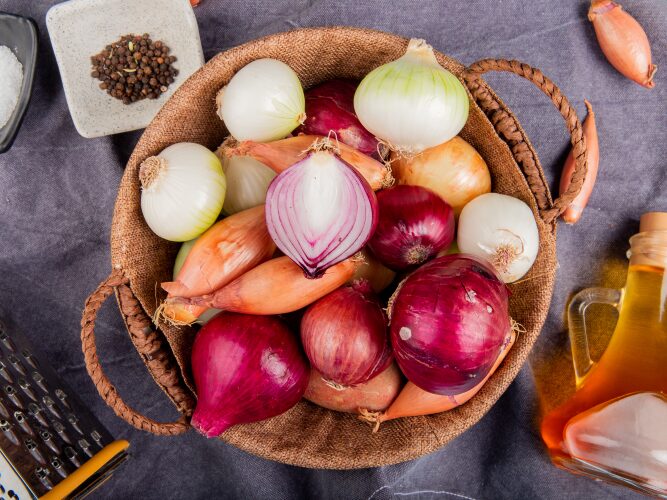
Garlic. Used with a measured hand. Rarely the loudest voice in the chorus, but it provides essential depth.
Tip: Smash the clove with the side of your knife to peel easily. For most dishes, a fine mince is best. Burnt garlic is bitter – add it after browning your meat.
Onions (yellow). The workhorse. For stocks, braises, and rustic dishes where a stronger, sweeter cooked-down flavour is needed.
Tip: They store for ages in a cool, dark place. Use them as the base for your French Tartiflette or stews.
The Protein Cornerstones
You don’t need a butcher’s whole counter. Just a few reliable choices.
Chicken (whole or thighs). A whole bird is for the Sunday Roast Chicken – a weekly ritual. Bone-in, skin-on thighs are for everything else: braises, quick sautés, and French Basque Chicken (Poulet Basquaise).
Tip: The skin is your flavour engine. Get it crispy in the pan first. It renders fat to cook in and leaves fond (those tasty brown bits) for your sauce.

Bacon (lardons or thick-cut). Not just for breakfast. These small batons of salty, smoky pork fat are the secret weapon in salads, tarts, and braises.
Tip: For lardons that get perfectly crisp without burning, start them in a cold pan with no extra fat. Let them render slowly over medium heat. The fat they release becomes your cooking oil for the onions or potatoes that follow, infusing the whole dish.
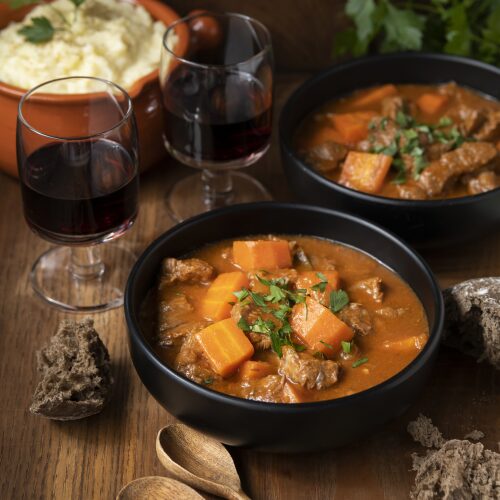
Beef (for stewing, like chuck). This isn’t the steak you grill. Although, you can’t beat the rump steak – blue cheese – french fries combo. You want a tough, marbled, flavourful cut that becomes tender through long, slow cooking. It’s the star of that soul-warming pot of Beef Bourguignon, where it braises in wine until it’s spoonably soft.
Tip: Don’t waste money on expensive cuts. Chuck or shoulder is perfect. The key is to cut it into large chunks and sear it hard before it braises – this builds the deep flavour for the entire dish.
Dairy & Eggs: The Richness Department
Good eggs. They’re a vehicle for cheese and herbs in a Classic French Quiche, the heart of a French Mayonnaise, and the key to a golden crust.
Tip: The “best by” date is your friend. For easier peeling of hard-boiled eggs, use older ones.

Crème fraîche. Now coming from Normandy, this is my absolute staple. This is your secret weapon. It’s thicker, tangier, and less sweet than sour cream, and it won’t curdle when boiled. Swirl it into a pan sauce, finish a soup, or dollop on a tart.
Tip: No crème fraîche? Mix equal parts sour cream and heavy cream, let it sit on the counter for an hour. Good enough in a pinch.
Cheese (Comté, Gruyère, or Emmental). These are the nutty, melty alpine cheeses you need for a proper French Gratin or a French Savoury Cake.
Tip: Always grate your own. Pre-grated cheese is coated in starch and will never melt as smoothly.
Pantry Staples: The Backbone
Dijon mustard. Not the bright yellow stuff. Smooth, sharp Dijon is for vinaigrettes, emulsifying sauces, coating meat before searing, creamy dishes and spreading on ham sandwiches.
Tip: A spoonful whisked into a pan sauce is an instant flavour bomb and helps thicken it.

White wine (dry). It’s for deglazing pans, making braising liquids, and steaming mussels.
Tip: Keep a bottle of decent dry white wine in the pantry for cooking. It lasts for weeks in the fridge once opened.
Good stock. Store-bought is fine if you doctor it. Simmer it with some herbs and a halved onion for 20 minutes to make it yours.
Tip: Reduced-sodium is best – you can control the salt.
Flour & Sugar . Keep it simple. Plain flour is your essential thickener for pan sauces and roux-based gravies, and the foundation for crepes, tarts, and the pastry in your quiche. Together with sugar and eggs, you’ve got the base for a delicious cake. Once should always be ready for an impromptu molten chocolate cake.
Tip: A tablespoon or two of flour dusted on stew meat before searing creates a better crust and helps thicken the braising liquid later. Self-raising flour is for one thing only: the delightfully tender crumb of a French Savoury Cake. Don’t swap one for the other – it’s a chemistry thing.

Herbs & Seasonings
Flat-leaf parsley. Toss it in at the end for a hit of fresh, green flavour. It’s the “just cooked” garnish.
Thyme. The king of herbs for braises, roasts, and stocks. Its woody stems hold up to long cooking.
Bay leaves. One or two in a stew or pot of beans adds a subtle, floral depth you’ll miss if it’s gone.
Sea salt (fine) & whole peppercorns. Season in layers. Salt as you cook. Grind pepper fresh – the pre-ground dust has no soul.
Useful Takeaways: Your French Kitchen Principles
- Fat is flavour. Butter, oil, bacon fat—they’re not villains, they’re your primary ingredients.
- Brown food tastes good. Don’t crowd the pan. Get a proper sear on your meat and onions. Those brown bits are your sauce foundation.
- Season as you go. Salt each layer – the aromatics, the protein, the liquid. Don’t just salt at the end.
- Fresh herbs are a finish line. Add tender herbs like parsley at the end. Hardy ones like thyme go in at the start.
- Your wine for cooking should be wine you’d sip. If it tastes sour in the glass, it’ll taste worse in your food.
Forget “authentic.” Aim for good. With these ingredients on hand, you’re not making a museum piece. You’re making dinner. And it’s going to be great.

Throw in your flavor