
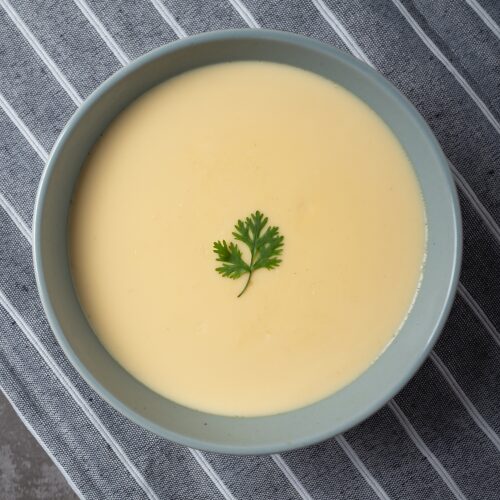
Classic Beurre Blanc (French White Wine Butter Sauce)
Ingredients
- 250 g Butter (salted)
 2 Shallots
 100 ml White wine e.g., Sauvignon Blanc, Pinot Grigio
 50 ml White wine vinegar
Instructions
- Peel and very finely dice the shallots. Cut the cold butter into small, uniform cubes (about 2cm) and keep them refrigerated until needed.
- Place your saucepan over medium heat. Add the finely diced shallots and the white wine vinegar. Cook, stirring frequently, until the vinegar has nearly or completely evaporated and the shallots are soft and translucent. This step concentrates the sharp vinegar flavour into the shallots. If you still have vinegar in there, poor it out.
- Pour the white wine into the pan with the shallots. Bring to a simmer and cook until the wine has reduced by about 90-95%. Poor the white wine out.
- Remove the pan from the heat and let the reduction cool for about 5 minutes. This crucial step prevents the butter from melting and splitting when you add it.
- Once the preparation has fully cool down, set the heat to the lowest possible setting and return the pan to the stove.
- Begin whisking in the cubes of cold butter, one or two at a time. Wait for each piece to be almost fully melted and incorporated into a creamy emulsion before adding the next. This process requires patience; do not rush it or add too much butter at once. Never stop whisking.
- Once all the butter is incorporated, you should have a pale, creamy, and smooth sauce that lightly coats the back of a spoon. Remove the pan from the heat immediately.
- Serve the beurre blanc immediately while warm. It is a classic sauce for poached or pan-fried white fish (like sea bass or cod), steamed asparagus, or chicken.
Notes
My sauce split or looks greasy. What went wrong and can I fix it?
This happens if the reduction was too hot when the butter was added, or the butter was added too quickly. To rescue it, remove from heat and whisk in an ice cube or a tablespoon of cold water to shock the emulsion back together. To prevent it: ensure the reduction has cooled sufficiently (step 4) and add the butter slowly over very low heat.
Why is it crucial to reduce the vinegar and wine so dramatically?
This step concentrates the flavour and evaporates the excess water. If you don’t reduce it enough, the remaining water will prevent the butter from emulsifying properly, resulting in a thin, greasy, or split sauce. You should be left with just a moist glaze of shallots, not free liquid.
Can I use a different type of vinegar or acid?
White wine vinegar is standard. You can use champagne vinegar or a good quality white wine. Do not use distilled white vinegar – it’s too harsh. Lemon juice can be added at the very end for brightness, but it’s not a substitute for the vinegar reduction which cooks the shallots.
What type of white wine is best?
Use a dry, crisp white wine you would drink, like Sauvignon Blanc, Pinot Grigio, or a dry Chenin Blanc. Avoid oaky wines (like some Chardonnays) or sweet wines, as they will dominate the delicate sauce. The rule is: if you wouldn’t drink a glass, don’t cook with it.
Can I make beurre blanc ahead of time?
It is famously a last-minute sauce and does not reheat well, as it will separate. However, you can prepare the shallot and wine reduction ahead of time and keep it at room temperature. When ready to serve, gently reheat the reduction, let it cool slightly, then proceed with whisking in the cold butter.
Do I have to use salted butter?
Salted butter is traditional and helps season the sauce. If you only have unsalted, you will need to add a pinch of fine sea salt to the reduction at the end of step 2. Taste the finished sauce before serving and adjust seasoning if necessary.
What if I don’t have shallots?
A very small amount of finely minced white or yellow onion can work in a pinch, but shallots are preferred for their subtle, sweet, and less pungent flavour. Do not use red onion.
What can I add to flavour the sauce?
Once the base sauce is made, you can stir in fresh, soft herbs like tarragon, chives, or dill. A little lemon zest or a teaspoon of capers are also excellent additions. Add these at the very end, off the heat.
What is the best way to serve it and with what?
Serve immediately in a warm sauce boat or poured directly over the dish. It is a classic pairing for delicate proteins like poached or pan-seared fish (sea bass, halibut), scallops, steamed asparagus, artichokes, or poached chicken breast.


Throw in your flavor