
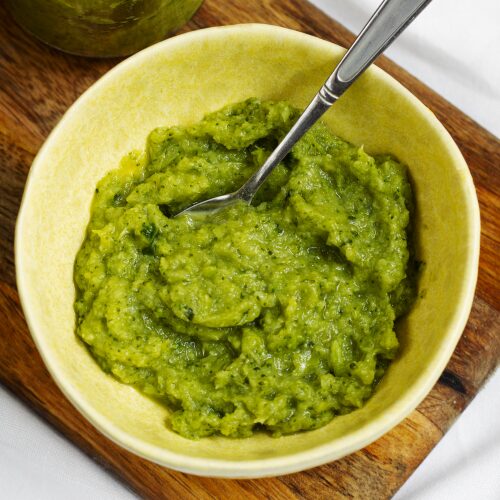
Authentic Mexican Salsa Verde
Ingredients
- 500 g Tomatillos (or green tomatoes if unavailable)

 1 Onion (yellow)
 3 Garlic clove
- 2 Chillies (green) eg. Jalapeno or serrano
 1 handful Coriander (fresh)
 1 Lime
 Olive oil
 Salt
Salt
Instructions
- Remove the husks from the tomatillos and rinse them under cold water to remove the sticky coating.
- Peel and roughly chop the onion and garlic. Remove stems from the chillies.
- Place tomatillos, onion, garlic, and chillies on a baking tray. Drizzle with a little olive oil and roast at 200°C / Gas 6 for 8–10 minutes until soft and slightly charred.
- Transfer the cooked vegetables to a blender or food processor. Add fresh coriander, lime juice, and a pinch of salt. Blend until smooth.
- Taste and add more salt or lime juice if needed. If the salsa is too thick, add a small splash of water.
Notes
FAQs
What is Mexican Salsa Verde?
Salsa Verde is a vibrant green sauce from Mexico, made with tomatillos, green chillies, onions, garlic, and fresh herbs. It’s tangy, slightly spicy, and perfect as a dip, condiment, or topping for tacos, grilled meats, and enchiladas.
How do I control the spiciness?
The heat is in the seeds and white membranes of the chillies. For a mild salsa, remove all seeds and membranes before roasting. For medium heat, leave some in. For a fiery salsa, use more chillies or include a serrano (which is hotter than a jalapeño). You can always add more after blending.
Can I use fresh or frozen tomatillos?
Fresh tomatillos are best for flavour and texture, but frozen tomatillos work well in a pinch. Defrost before using and drain excess liquid if needed.
Can I make salsa verde in advance?
Yes! Store in an airtight container in the fridge for up to 5 days. The flavours will develop further over time, making it even tastier.
How do I keep salsa verde bright green?
Blanch the tomatillos briefly in boiling water, then shock them in cold water. Blend just until smooth, avoiding over-processing. Adding a little lime juice at the end also helps maintain colour.
Can I freeze salsa verde?
Yes. Freeze it in ice cube trays for easy portioning, then transfer the cubes to a freezer bag. It will keep for up to 3 months. The texture may be slightly softer upon thawing, but the flavour will remain excellent. Thaw overnight in the fridge.
Can I make salsa verde vegan or gluten-free?
Absolutely! Traditional Mexican salsa verde contains no animal products or gluten. It’s naturally vegan and gluten-free.
What herbs and seasonings are traditional in salsa verde?
Typical ingredients include fresh coriander (cilantro), garlic, onion, lime juice, and salt. Some recipes also include a pinch of sugar or a small avocado for creaminess.
What are the best ways to use it?
It’s incredibly versatile. Use it as a dip for tortilla chips, a topping for tacos (especially carnitas or chicken), enchiladas verdes, a marinade for grilled meats, or a vibrant sauce for eggs (huevos rancheros verdes). It also makes a great dressing for a Mexican-style potato salad.
Can I make salsa verde in a blender?
Yes! A blender or food processor is ideal. Pulse briefly for a slightly chunky texture or blend longer for a smooth sauce. Avoid over-blending if you want it rustic.
What are tomatillos and what can I use if I can’t find them?
Tomatillos are small, green, tomato-like fruits with a papery husk and a bright, tangy flavour essential for authentic salsa verde. If unavailable, use green (unripe) tomatoes mixed with a squeeze of extra lime juice for acidity. The flavour will be different, but it will still be a tasty green salsa.
Can I make this salsa without roasting the vegetables?
You can, but you’ll lose the signature smoky depth and complexity. Roasting (or boiling) the tomatillos, onion, and chillies softens their raw bite, caramelises their sugars, and creates a more rounded, authentic flavour. The extra 10 minutes are non-negotiable for the best result.
How long does homemade salsa verde last in the fridge?
Stored in a completely clean, airtight container, it will keep well for up to 1 week. The lime juice acts as a natural preservative. The flavour often improves in the first day or two as the ingredients meld.
My salsa is too thick. How do I thin it out?
Do not add more oil. Add a small splash of water, one tablespoon at a time, and blend again until you reach your desired consistency. You can also use the water you boiled the tomatillos in, if you boiled them, as it contains flavour.
Can I use a different type of onion or herb?
A white onion is traditional for its sharp bite that mellows when roasted. A yellow onion is a fine substitute. Do not use red onion unless you want its colour to tint the salsa. Coriander (cilantro) is essential; there is no substitute for its unique flavour in this recipe.
Is it better to roast or boil the tomatillos?
Roasting (or charring on a comal) is preferred for a deeper, smokier flavour. Boiling is a common traditional method that yields a brighter, tangier, more purely acidic salsa. Both are authentic; roasting simply adds a more complex flavour profile.
My salsa tastes bland. What can I do?
It likely needs more salt and acid. Season it incrementally, adding a pinch of salt and a squeeze of lime juice, then tasting until the flavours pop. Also, ensure you roasted the vegetables until properly softened and slightly charred for maximum flavour development.



Throw in your flavor