
Quiche with any filling


Ingredients

 3 eggs
 300 ml double cream
 1 Shortcrust pastry can be replaced with puff pastry
 100 g Emmental cheese (grated)
- 4 cheese triangles optional
- 2-3 fillings of your choice
 herbs of your choice
Instructions
- Pre-heat oven at 180 °C (356 °F) (fan oven)
- In a flan dish, spread the pastry and prick it with a fork.
- Spread the cheese triangles over the pastry.
- In a bowl, mix the double cream, eggs, half of the Emmental cheese, along with the spices and herbs of your choice.
- Spread the fillings of your choice over the pastry.
- Pour your mixture onto the pastry and sprinkle the remaining grated Emmental on top.
- Bake for about 20-25 minutes at 180 °C (356 °F) (fan oven)
- Let it rest a bit before serving. It can be served hot or cold.
Notes
- Courgette & Salmon or Trout
- Goat cheese & Spinach
- Lardons & Onion
- Pepper & Courgette (Vegetarian)
FAQs
Do I need to blind bake the pastry first?
With this quick method and a very hot oven, you can often get away without it, especially if your filling is not too wet. However, for a guaranteed crisp, not soggy, bottom, blind baking is the professional’s secret. Line the pastry with parchment, fill with baking beans or rice, and bake at 180°C for 15 minutes before adding your filling.
What’s the ideal ratio of eggs to cream for the custard?
This recipe uses a classic 1:100 ratio (3 eggs to 300ml cream) for a rich, firm, and creamy set. For a lighter quiche, you can substitute up to half the double cream with whole milk. Never use only milk, or the custard will not set properly.
My fillings made the bottom soggy. How do I prevent that?
Most vegetables (like spinach, courgette, mushrooms) must be cooked first to remove their excess water. Sauté them until they’re dry. Let all cooked fillings cool completely before adding them to the raw pastry. Wet fillings are the enemy of a crisp base.
Can I use milk instead of double cream?
You can use single cream or a mix of milk and cream, but the quiche will be less rich and less stable. Using all milk will result in a watery, rubbery texture. The fat in the cream is essential for the luxurious mouthfeel and proper setting of the custard.
How do I know when the quiche is perfectly set?
It should be puffed slightly at the edges and the centre should have a very slight, gentle wobble, like set jelly. It will firm up as it cools. If the centre is liquid, it needs more time. If it’s completely firm and pulling away from the sides, it is overbaked and may weep.
Can I make a quiche completely ahead of time?
Absolutely. Quiche is a champion of make ahead meals. Bake it completely, let it cool, and refrigerate for up to 3 days. Serve cold, at room temperature, or reheat gently in a low oven (150°C) until warmed through.
Why is there cheese in the custard mix and also on top?
The cheese in the custard melts into the base, seasoning it throughout. The cheese on top forms a delicious, golden, flavourful crust. It’s a simple trick for maximum cheese impact. Grated Gruyère or Comté, are all excellent alternatives to Emmental.
Can I freeze a cooked quiche?
Yes, very successfully. Cool the baked quiche completely, wrap tightly in cling film and foil, and freeze for up to 3 months. Thaw overnight in the fridge and reheat in a low oven. The pastry may soften slightly but will still be good.
What are the rules for choosing fillings?
The golden rule: keep it dry. Use about 1.5 to 2 cups total of pre cooked, moisture squeezed out fillings per this recipe size. Always season your fillings well before they go in. Classic combinations exist for a reason (lardons & onion, spinach & goat cheese), but the canvas is yours.
My quiche puffed up like a balloon and then collapsed. Is that normal?
Yes, that’s normal. The eggs inflate slightly during baking and then deflate as the quiche cools. The collapse is minimal if you haven’t over beaten the custard. To minimise it, mix the custard ingredients just until combined; do not whip air into it.


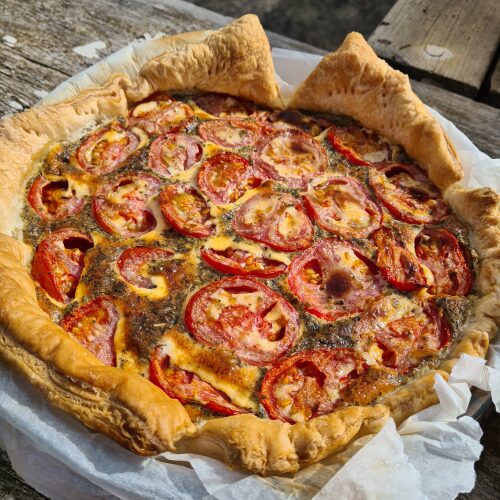
Very quick and easy to make and versatile !