
Traditional Kaiserschmarrn or Sissi’s mess (Austrian Pancake)
Ingredients
For the Kaiserschmarrn:

 3 tbsp Flour (plain)
 1 pinch Salt
 3 Eggs
 125 ml Milk
 2 tbsp Sugar (caster)
 0.5 tsp Vanilla extract
 1.5 tbsp Butter (unsalted)
- Raisins
- Rhum
To caramelise:
- 1 tbsp Sugar (caster)
- 1 tbsp Butter (unsalted)
For Garnishing:
- 1 tbsp Icing sugar
- Applesauce
- Mint (fresh) (optional)
- Berries (optional)
Instructions
- Soak the raisins in rhum in bowl.
- Separate egg whites and yolks. Keep both
- Mix the melted butter, flour, salt, vanilla extract and egg yolks in a bowl. Gradually add a little milk until a thick, smooth batter forms.
- Beat the egg whites with 1 tbsp sugar until stiff, then gently fold into the batter.
- Heat the butter in a pan, add the batter, and cover with a lid. Cook for 6-7 minutes. Add the rum-soaked raisins halfway through.
- Once the underside is golden brown, cut the pancake in half, flip, and tear into large pieces.
- Add 1 tbsp sugar and a little butter, then caramelise the pieces lightly.
- Dust with icing sugar and garnish as desired with applesauce, mint, and berries.
Notes
FAQs
What exactly is Kaiserschmarrn?
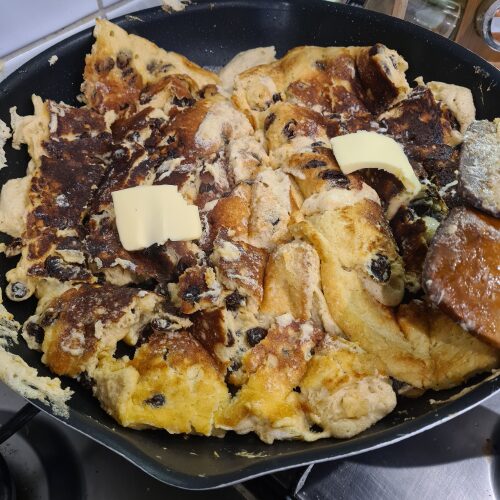
It’s a beloved Austrian dessert (or hearty sweet main) translating to “Emperor’s Mess.” It’s a thick, fluffy sweet pancake that’s deliberately torn into rustic, caramelized pieces while cooking. Think of it as a cross between a soufflé, a pancake, and French toast.
Why do I need to separate the eggs? Can’t I just mix them whole?
Separating is the key to the signature light, airy, soufflé-like texture. Whipping the egg whites to stiff peaks and folding them in is what creates the fluffy cloud of batter. Using whole eggs will result in a dense, flat pancake, not a true Kaiserschmarrn.
Do I have to use raisins soaked in rum?
The rum-soaked raisins are traditional and add a lovely boozy sweetness. If you prefer, you can soak them in warm water, apple juice, or simply omit them. If you omit the soaking step, toss the raisins in a little flour first to prevent them from sinking to the bottom.
My Kaiserschmarrn burned on the bottom before cooking through. What went wrong?
Your heat was likely too high. Cook it over a medium-low heat with the lid on. This allows the thick, fluffy centre to set and cook through via steam before the bottom over-caramelizes. Patience is required.
Can I make this without the second caramelization step?
You can, but you’ll miss a defining feature. The final step of adding sugar and butter to the torn pieces and letting them caramelize slightly in the pan creates delicious crispy, sweet edges and deepens the flavour. It’s worth the extra two minutes.
What’s the best pan to use?
A large (26-28cm), well-seasoned cast iron or non-stick skillet is ideal. It needs to be able to go from stovetop to oven if you prefer to finish it under the broiler/grill for a more even rise, though the lid method works perfectly.
Is it traditionally served with applesauce?
Yes, a side of warm, slightly chunky applesauce (Apfelmus) is the classic, non-negotiable accompaniment. The cool, tart applesauce perfectly balances the sweet, buttery, caramelized pancake. Whipped cream, berry compote, or plum jam are also common.
Can I prepare the batter ahead of time?
No. The batter must be used immediately after folding in the egg whites, or the air bubbles will deflate, resulting in a dense Schmarrn. Have all your ingredients measured and pan ready before you start whipping the whites.
Is this a dessert or a main course?
In Austria, it’s versatile! It’s commonly enjoyed as a hearty sweet lunch (Mittagessen), a late-afternoon snack, or a dessert. For a main, serve it with a side salad to cut the richness.
My Kaiserschmarrn fell apart when I tried to flip it. Help!
This is expected! The “mess” (Schmarrn) is in the name. You’re not meant to flip it neatly like a pancake. The technique is to cut it into quarters or large pieces with your spatula in the pan, then flip those pieces individually. It’s meant to be rustic.
Why is this dish also called “Sissi’s Mess”?
The name is a playful nod to Empress Elisabeth of Austria (“Sissi”), who was famously conscious of her figure and legendarily restrictive with her diet. The story goes that her imperial chefs, to encourage her to eat, created this delicious, rich dish and presented it as a mere “mess” or accident in the kitchen to avoid the association of a decadent dessert. Whether true or just a good tale, the nickname stuck, perfectly capturing the dish’s deliciously rustic, torn appearance.


I am quite partial to French toast so when I tried this dish I thought this is the perfect balance between French toast and pancakes. It’s so easy and delicious, defo a crow pleaser!