
Pork Rib Roast with Creamy Tarragon Sauce
Ingredients
For the roast:
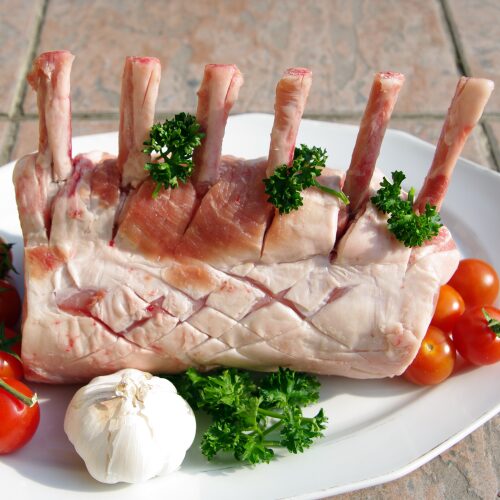
- 5 Bone Rib Roast (approx. 1.5kg for 5-bone)
 0.5 tsp Juniper berries
 2 tbsp Butter (unsalted) (or duck fat for more flavour)
 Salt
Salt Black pepper
For the sauce:
 500 ml Chicken stock
 125 ml Creme fraiche
- 3 sprigs Tarragon (fresh)
- 2 tsp Tarragon (fresh)
 2 Shallot
- 1 tsp Corn flour
 1 tsp Water
Instructions
Roasting the beast:
- Position a rack in the centre of your oven. Preheat the oven to 200°C (400°F/Gas Mark 6). This higher initial temperature is key for developing a good crust
- Pat the pork rib roast completely dry with kitchen paper. Rub the crushed juniper berries all over the meat, then season generously on all sides with salt and pepper.
- In a large, oven-proof frying pan or skillet, melt the butter over medium-high heat. Add the roast and brown it well on all sides, including the ends. This will take 8-10 minutes total and creates a flavourful base for the sauce. Remove the pan from the heat, but do not clean it.
- Place the pan with the seared roast directly into the preheated oven. Roast for 20 minutes. This initial high heat sears the outside.
- Without opening the door, reduce the oven temperature to 150°C (300°F/Gas Mark 2). Continue to roast for approximately 45 to 55 minutes. Start checking the internal temperature with a meat thermometer after 45 minutes
- The pork is done when a thermometer inserted into the thickest part of the meat (avoiding the bone) reads 57-60°C (135-140°F) for a perfectly juicy, slightly pink result. Remember, the temperature will rise by 5-8°C (10-15°F) while resting. If you don't have a thermometer, the total cooking time will be roughly 65-75 minutes.
- Transfer the roast to a serving platter or board, tent loosely with foil, and let it rest for a minimum of 15 minutes. The internal temperature will continue to rise to a safe and ideal 63°C (145°F)
Make the sauce:
- Use the same pan you seared the meat in. Place it over medium heat and add the chopped shallot. Cook for 2-3 minutes until softened.
- Pour in the chicken stock and use a wooden spoon to scrape up all the browned bits from the bottom of the pan.
- Add the creme fraiche and the sprigs of tarragon. Bring to a gentle simmer and let it reduce by about half, which will take 15-20 minutes.
- In a small bowl, mix the cornflour with the cold water to make a slurry. Whisk this into the simmering sauce and cook for 1-2 minutes until slightly thickened.
- Remove the tarragon sprigs. Stir in the 2 teaspoons of chopped fresh tarragon. Season the sauce to taste with salt and pepper. Keep warm.
Serve:
- Carve the roast by slicing between the bones. Serve each portion with a generous spoonful of the warm cream and tarragon sauce.
Notes
.
FAQs
Why is the oven temperature lowered during roasting?
The initial high heat (200°C) creates a flavourful, browned crust. Reducing the temperature to 150°C for the remainder of the cook ensures the meat cooks gently and evenly throughout without burning the outside or drying out the precious interior.
What internal temperature should I aim for?
For juicy, slightly pink pork, remove the roast from the oven when the thermometer reads 57-60°C (135-140°F) in the thickest part, away from bone. It will continue to rise to a safe and perfect 63°C (145°F) while resting. Overcooking past this will result in dry meat.
I don’t have a meat thermometer. How do I know it’s done?
A thermometer is highly recommended. Without one, estimate total cook time at roughly 45 minutes per kg. The meat should feel firm but yielding when pressed. Clear (not pink) juices will run when pierced. Let it rest; the residual heat will finish the job.
Can I use a different cut of pork?
This high-low method is designed for a large, bone-in roasting joint like a rib roast. Using a boneless loin will cook faster and may dry out more easily. Adjust cooking time downwards significantly if using a smaller or boneless cut, and monitor the temperature closely.
Is the searing step absolutely necessary?
Yes. Searing creates the Maillard reaction: the complex browning that adds deep, savoury flavour to both the meat and the subsequent sauce. It is the foundation of the dish. Do not skip it.
What can I substitute for juniper berries?
Juniper adds a piney, gin-like note that complements pork beautifully. If you don’t have them, use 1/2 teaspoon of crushed fennel seeds, a few sprigs of fresh rosemary in the pan, or simply rely on generous black pepper. The dish will be different but still excellent.
My sauce seems too thin after reducing. What can I do?
The cornflour slurry is your tool for perfect consistency. If the sauce is still too thin after adding it, make another half portion of slurry (1/2 tsp cornflour + 1/2 tsp water) and whisk it in, simmering for another minute. Add gradually to avoid over-thickening.
Can I prepare any part of this ahead of time?
You can make the sauce base ahead. Complete it through the reduction step (before adding the cornflour and fresh tarragon). Cool and refrigerate. Reheat gently, then proceed with the cornflour slurry and finish with the fresh chopped tarragon just before serving. The roast must be cooked fresh.
How should I carve the rib roast?
Let it rest first. Place it bone-side down. Use a sharp carving knife to slice between the ribs, giving each person a bone-in chop. For more portions, you can slice the meat off the bone entirely first, then slice it crosswise.
What are the best sides to serve with this?
Choose sides that won’t compete with the elegant sauce. Creamy mashed potatoes, buttered steamed greens (green beans, tenderstem broccoli), and simple roasted carrots or parsnips are perfect. The sauce is the star.



Throw in your flavor